
"1960s coffee culture"
200 article(s) found

Differences, distinctions and awards of individual beans in Brazilian coffee
Exchange of professional baristas please follow the coffee workshop (Wechat official account cafe_style) Brazilian coffee individual bean differences, distinction and award situation in addition, 80% of Brazilian coffee is dried coffee, the remaining 20% is semi-dried and washed. Its coffee taste characteristics are different, but high-quality coffee slightly tends to use semi-dry treatment. However, drying treatment

Brazilian Coffee Bean Variety Characteristics Region Treatment Flavor Description
Professional barista exchanges, please pay attention to coffee workshop (Weixin Official Accounts cafe_style ) Brazilian coffee varieties Although coffee has diversity, Brazilian coffee is suitable for public taste. For example: coffee produced in northern coastal areas has a typical iodine taste, reminiscent of the sea after drinking. This coffee is exported to North America, the Middle East and Eastern Europe. There's also something interesting and worth pursuing.

Grading, price, raw beans and baking curve of Brazilian coffee
For the exchange of professional baristas, please follow the coffee workshop (Wechat official account cafe_style) Brazilian coffee individual bean classification, price, raw beans and baking curve traditional wind selection props coffee advanced countries Brazil has not yet exported to Japan there are many kinds of coffee. Due to the domestic road traffic conditions, land transport is difficult, although it can produce fine coffee but can not circulate < CHAPADA DE M

The flavor of Brazilian coffee beans describes the historical characteristics of taste cultivation.
Professional baristas please pay attention to the coffee workshop (Wechat official account cafe_style) Brazilian coffee taste Brazilian coffee is a low-acidity, medium-roasted coffee beans from the World Coffee Center. As a kind of high-quality coffee, Brazilian coffee can be drunk individually or mixed. ● quality beans: Sangdo-style NO.2, size NO.18 ● flavor characteristics: mild, bitter medium,

The characteristic varieties and flavors of Brazilian Coffee describe the planting History
Professional baristas exchange please follow the coffee workshop (Wechat official account cafe_style) Brazilian coffee characteristics of Brazilian coffee generally refers to the coffee produced in Brazil. There is a wide variety of Brazilian coffee, the vast majority of which are unwashed and sun-dried, classified according to the name of the state of origin and the port of transport. Brazil has 27 states and 17 states produce coffee, but four of them produce the most coffee.

Varieties of beans, brand recommendation and manor introduction of Brazilian coffee
The exchange of professional baristas please pay attention to the coffee workshop (Wechat official account cafe_style) Brazilian coffee single bean species, brand recommendation and manor introduction since the 1930s, the research on bean seeds has been limited by congenital conditions, and the Brazilian government has invested a lot of resources to improve varieties and disease resistance since the 1930s. Among them, the results of bean research still affect the planting habits of Latin America as a whole. Like him.
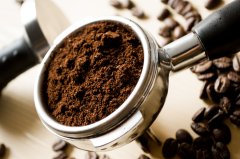
Flavor characteristics, producing areas and brewing parameters of single bean of Brazilian coffee
For the exchange of professional baristas, please pay attention to the coffee workshop (Wechat official account cafe_style) Brazilian coffee single bean flavor characteristics, production areas and brewing parameters in the elevation of 8501200m flat large coffee plantation cultivation of coffee, taste slightly smooth mostly neutral coffee. In contrast, the coffee produced in the mountains in Brazil is slightly higher above sea level and is affected by the sunshine on the slope of the hillside.

Brazilian coffee planting history will be less flavor to describe the characteristics of the producing area.
For the exchange of professional baristas, please follow the coffee workshop (Wechat official account cafe_style) Brazil is the largest country in Latin America and the largest coffee producer in the world in the past 150 years. 1/3 of the world's coffee comes from Brazil, followed by Vietnam, Colombia and Indonesia. The annual output of Minas Gerais province in the southeast alone (20 million bags) has surpassed that of neighboring Colombia.

Introduction of Brazilian Coffee single Bean Flavor description Variety planting Development History of producing area treatment Manor
For the exchange of professional baristas, please pay attention to the coffee workshop (Wechat official account cafe_style). Brazil's coffee industry two large bags of coffee beans on coffee plantations in the state of Minas Gerais, Brazil. Taken in Sao Paulo, Brazil's coffee industry accounts for about 1/3 of the world's total output and is currently the world's largest coffee producer. Coffee cultivation in Brazil
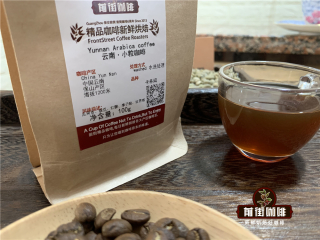
Yunnan small Coffee, known as "fragrant Coffee", introduces the characteristics of Alpine Arabica Coffee producing areas in Yunnan, China
Coffee is a kind of beverage crop with high economic value, which is called the three largest beverages in the world together with cocoa and tea, and its output and consumption ranks first among the three beverages. Coffee is rich in protein, fat, sucrose, starch, glucose, caffeine and other substances, rich aroma and delicious taste. Coffee belongs to the family Rubiaceae.

The efficacy of coffee classification and taste characteristics _ common coffee varieties and price pictures
Professional coffee knowledge exchange more coffee bean information Please follow the coffee workshop (Wechat official account cafe_style) in this era of petty bourgeoisie sentiment and ritual life, coffee culture is increasingly coming into people's lives, unground coffee beans are also gradually known by the public. Both instant coffee and high-grade coffee beans are processed from the seeds of the fruits of coffee trees.

Description of the flavor characteristics of coffee varieties, individual coffee and representative coffee
Ethel sa is a variety that was discovered in 1904 and originated in the Charlie River Basin in Africa. It has small fruit and high yield per plant, especially a drought-resistant variety. The product has a strong flavor, slightly bitter taste and less cultivation. Typica: the oldest native variety in Ethiopia, all Arabica are derived from Tibica. The top leaves of Tibica are bronzed and beans.

Which country has the best coffee beans? The Story of African Coffee beans the flavor characteristics of African coffee
Professional coffee knowledge exchange more coffee bean information please follow the coffee workshop (Wechat official account cafe_style) boutique (single product) coffee bean characteristics: 1. Boutique coffee beans must be high-quality beans with flawless beans. It should have an outstanding flavor, not without a bad taste, but with a particularly good taste. two。 High-quality coffee beans must be excellent varieties, the coffee beans produced

African Coffee Bean producing areas and characteristics Story of Starbucks Coffee Bean producing areas
To visit Hawaii, in addition to the beautiful beach, don't forget the Hawaiian coffee bean-Kona. The taste is sweet with the sour taste of wine, which is very special. The most traditional and famous coffee in Hawaii. However, due to the low production here, the surprisingly high cost, and the increasing demand for individual coffee in the United States and other places, its unit price is not only getting higher and higher, but also

Introduction of Coffee Flavor-- an introduction to the Flavor characteristics of Asian, African and American products
There are more than 6000 species of coffee trees, most of which are tropical trees and shrubs. There are four main coffee trees in the world, of which only two are of real commercial value and are planted in large quantities, and the quality of the coffee beans produced by other coffee trees is also higher than that of other coffee trees. The first is Arabica beans, the world-famous Blue Mountain Coffee, Mocha Coffee and so on.

Popular science | knowledge of coffee varieties, types and characteristics of individual coffee with picture introduction
Professional coffee knowledge exchange more coffee bean information Please pay attention to the coffee workshop (Wechat official account cafe_style) various rare coffee varieties introduction and naming methods there are more than 6000 species of coffee trees, most of which are tropical trees and shrubs. There are four main coffee trees in the world, and only the ones that have real commercial value and have been planted in large quantities

Popular science | knowledge of coffee varieties, introduction of the types and tastes of individual coffee, price of single bean
For the exchange of professional baristas, please follow the coffee workshop (Wechat official account cafe_style) popular science | knowledge of coffee varieties, types and tastes of individual coffee there are more than 6000 species of coffee trees, most of which are tropical trees and shrubs. There are four main kinds of coffee trees in the world, of which only two are of real commercial value and are planted in large quantities.

Explanation on the types and characteristics of individual Coffee in Coffee Shop
I often look forward to a scene: a leisurely afternoon, sitting by the window, a little lazy, a little blurred, the music as if nothing, reading a favorite novel, the coffee on the table gives off a seductive fragrance, for a moment, the dark fragrance floats, just like a wonderland, but for many people who don't drink coffee often, what does it taste like in those coffee with many varieties and advantages? Where?

A brief introduction to the introduction to Coffee roasting, the complete Book of Coffee self-baking
When the author published the first edition of this book in 1996, roasting coffee beans at home was something that only tireless coffee addicts would do. At that time, roasting coffee beans was a very difficult thing to master, and roasters had to work hard to find a way to roast coffee beans to a moderate brown. Today, individuals still roast coffee beans at home.
The introduction to coffee roasting recommends the complete Book of Coffee self-baking.
When the author published the first edition of this book in 1996, roasting coffee beans at home was something that only tireless coffee addicts would do. At that time, roasting coffee beans was a very difficult thing to master, and roasters had to work hard to find a way to roast coffee beans to a moderate brown. Today, individuals still roast coffee beans at home.